










If you want to gain muscle and strength, but are unsure which method to choose, a program based solely on compound exercises may be your best option.
Compound exercises work multiple muscle groups simultaneously. They allow you to lift heavier weights, activate more muscle fibers, and develop strength more effectively than isolation exercises alone.
A program consisting solely of compound exercises is simple yet highly effective. Whether your goal is muscle mass, strength, performance, fitness, or fat loss, this routine can deliver excellent results.
What exactly are compound workouts?
Compound exercises are movements that engage multiple skeletal joints and muscles simultaneously.
Instead of targeting a single muscle, they work muscle chains distributed throughout the body.
Examples: squats, deadlifts, pull-ups, bench press, rowing, military press, lunges and dips.
The squat primarily works the quadriceps, glutes, hamstrings, and core. The bench press targets the pectorals, shoulders, and triceps, while the deadlift engages the entire posterior chain.
How muscles develop quickly with compound exercises
1. Higher muscle activation
With compound exercises, athletes generally achieve greater muscle activation than with isolation exercises.
By lifting weights and applying progressive overload, you stimulate strength and hypertrophy, especially with good recovery.
An intense set of squats engages the entire body more than a machine. This is why many advanced athletes use compound routines to gain strength and muscle mass.
2. Heavy loads develop strength
Because compound exercises engage multiple muscles, they allow you to lift heavier weights, improve strength, power output, and functional strength.
That's why squats, presses, deadlifts and rowing are preferred for building a stronger body.
3. Improved training efficiency
The great advantage of a routine composed solely of ingredients is its effectiveness.
Rather than training each muscle separately, she works several muscle groups together.
For example, bench press, incline dumbbell press and dips work the pectorals, triceps and shoulders at the same time, which accelerates muscle gain.
Why compound training improves athletic performance
In addition to develop muscles, It improves balance, coordination, stability, posture and movement quality.
Athletes make extensive use of compound exercises, as the sport requires the entire body to move as a whole.
Even in everyday life, they facilitate actions like lifting, climbing, carrying, and sprinting. Therefore, they remain effective for both beginners and advanced users.
The best compound exercises for muscle growth
Lower body exercises

The squat is one of the best exercises for the lower body. It targets:
➖Quadriceps
➖Buttocks
➖Hamstrings
➖Core training
Deadlifts develop overall strength and target:
➖Buttocks
➖Hamstrings
➖Back
➖Trapezes
➖Socket
➖Core training
Lunges are perfect for balance and unilateral strength.
The slots are working:
➖Quadriceps
➖Buttocks
➖Hamstrings
All of these exercises are powerful for strength and hypertrophy.
Upper body pushing exercises

The bench press develops the upper body and works:
➖Pectorals
➖Shoulders
➖Triceps
The military press strengthens the shoulders and works:
➖Deltoids
➖Triceps
➖Upper pectorals
➖Core training
Dips also develop the upper body very well and target:
➖Pectorals
➖Triceps
➖Shoulders
Upper body pulling exercises
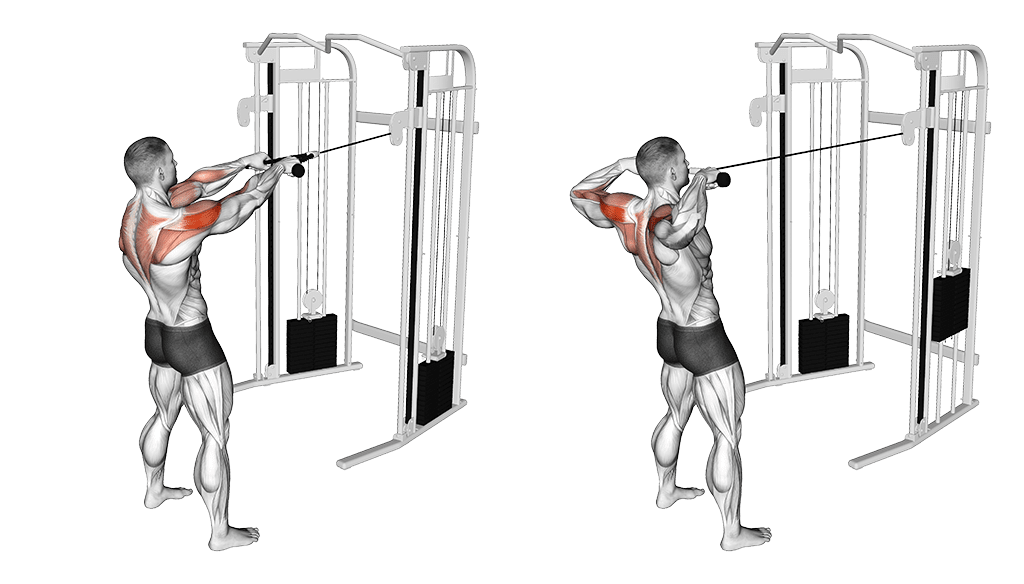
Pull-ups with a pronated or supinated grip develop upper body strength and width. They target:
➖Latissimus dorsi
➖Biceps
➖Upper back
The barbell row improves posture and back thickness. It works:
➖Latissimus dorsi
➖Trapezes
➖Rhomboids
➖Rear deltoids
For an effective program, add variations of these exercises to your compound full-body plan.
Day 1: Upper body
- Do 4 sets of classic bench press,
- Perform 4 sets of pull-ups.,
- Do 3 sets of military press, then 3 sets of
- barbell rowing and finish with 3 sets of dips.
Day 2: Lower body
- Start with 3 to 4 sets of squats
- Move on to Romanian deadlifts with 4 sets
- Next, do 3 sets of walking lunges, then finish with 3 sets of front squats.
Day 3: Full body strength
- Start with 4 sets of deadlifts
- Next, do 3 sets of incline dumbbell presses.
- Perform 3 to 4 sets of pull-ups
- Follow with 3 to 4 sets of Bulgarian Split Squats
- Finish with 3 sets of Push Press
To get the most out of a compound program, pay attention to progressive overload.
This means progressively increasing the loads, repetitions, volume, and quality of the movement. It also involves improving technique and control.
With compound exercises, consistency remains the key to developing muscles quickly.
Common mistakes with compound training
- Lifting heavy loads without proper technique increases the risk of injury and hinders progress.
- Doing very intense sessions at every workout increases the risk of accidents and injuries. Train smart by balancing intensity, progressive overload, and recovery.
- Neglecting recovery after compound exercises is a mistake. Get enough sleep, drink plenty of water, stay hydrated, eat properly, and manage your stress.
- Doing too many heavy, high-volume compound exercises in a single session can be counterproductive. Progress properly with progressive overload rather than forcing gains in one session.
So, are isolation exercises bad?
Isolation exercises aren't bad. They help correct weaknesses, target small muscles, improve muscle connection, and increase volume.
But if the goal is efficiency, compound exercises should remain the basis of your training.
View isolation exercises as a supplement, not as the primary objective.
Conclusion
If your goal is the weight gain, Incorporating compound exercises into your program is an excellent choice.
As mentioned, they engage more muscle groups, which is why they are often preferred to classic isolation exercises.
However, it's important to be aware of the risks: injuries and longer recovery times. With proper technique, intelligent progressive overload, a clean diet, and sufficient rest, you significantly reduce the risk of exhaustion and injury.
Leave a Reply
You must be logged in to post a comment.